
Cage-Free, Free-Range, Pasture-Raised: What Egg Labels Mean
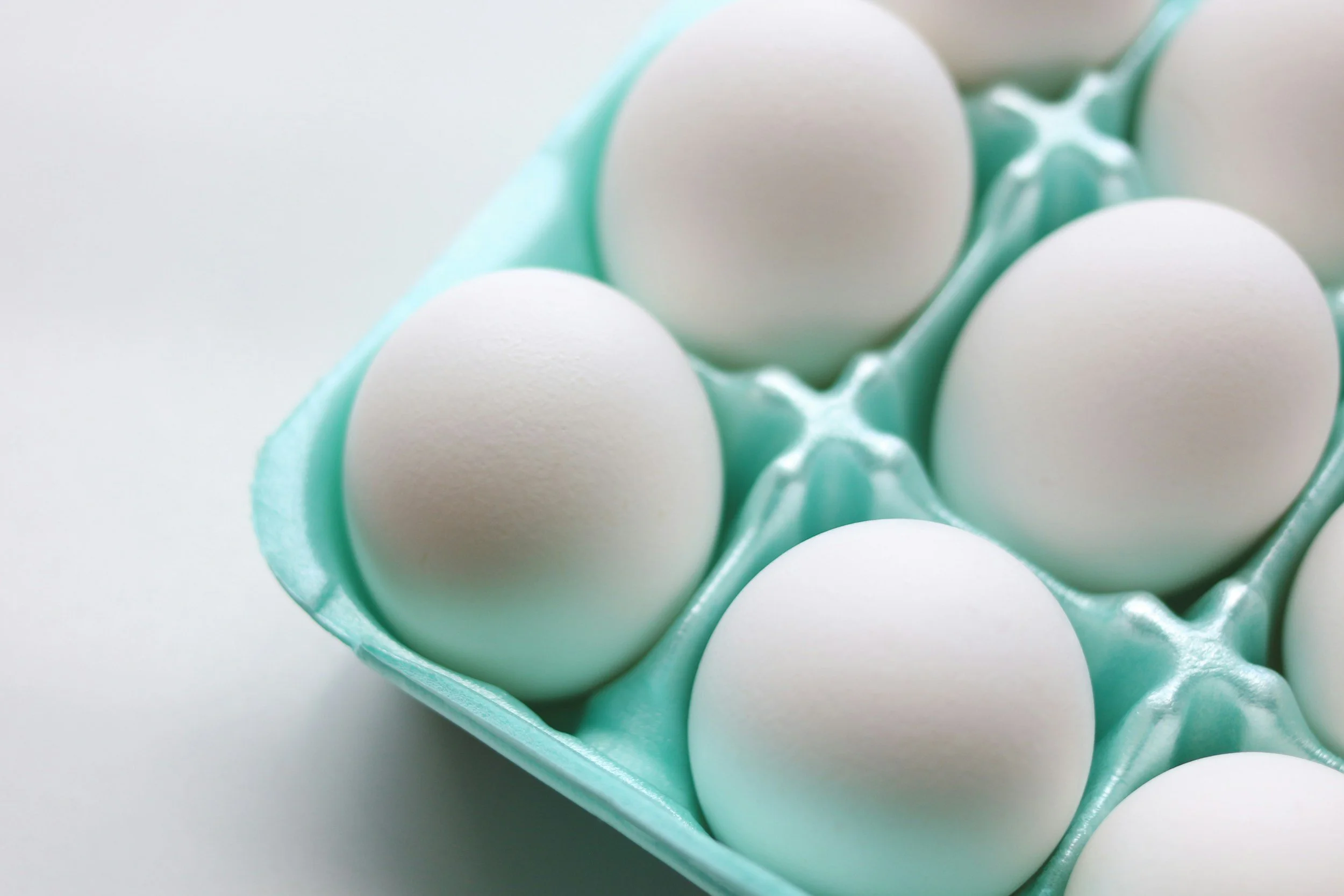
In most US states, if you pick up a conventional egg carton (with no animal-welfare claims on it), those eggs came from birds forced to live their lives in tiny battery cages.
What’s a battery cage?
A battery cage is a wire box confining several hens. Companies stack them in rows and tiers inside giant sheds.
In a battery cage, each hen gets less floor space than a single sheet of paper. She can’t even spread her wings.
The floor is sloped wire. A hen in that cage cannot lay her egg in a nest, cannot roost off the ground at night, cannot dust bathe, cannot scratch or forage, and cannot even walk.
If battery cages sound cruel to you, you’re in good company.
California, for instance, defines confinement “in a cruel manner” to include “[c]onfining a covered animal in a manner that prevents the animal from lying down, standing up, fully extending the animal’s limbs, or turning around freely.” Cal. Health & Safety Code § 25991(e)(1). California thus bans both the confinement of hens in battery cages and the sale of eggs produced via such cruel confinement. Cal. Health & Safety Code § 25990(a), (b)(3).
Colorado, Massachusetts, Michigan, Nevada, Oregon, and Washington also ban both the production and sale of eggs from battery-caged hens. And Rhode Island bans the production.
About half of American hens are still in cages.
As of July 2026, USDA counted about 312 million hens producing table eggs,¹ and estimated roughly 150.2 million cage-free layers.²
What “cage-free” means
Cage-free means the hens are out of cages and living in a barn.
A hen in a cage-free barn still lives indoors. But at least she is free to walk around and stretch her wings. She can choose which other hens to interact with and which to avoid.
If I were a hen, I know I'd want the chance to at least walk and stretch my wings.
Indeed, cage-free housing is such a step up that the animal protection movement has dedicated a huge portion of its resources to simply urging companies and legislators to give animals this modicum of grace.
What “free-range” means
Free-range means cage-free, plus a door to the outside.
For cartons carrying the USDA grade shield, USDA’s label-approval instruction describes free-range hens as “free to roam within the provided shelter with continuous access to the outdoors,” and notes that “[t]he outdoor area may be limited to an area that prevents interaction with wild birds and migratory water fowl to reduce the risk of the transmission of avian diseases.”³
Whether “free-range” is yet another step up from “cage-free” depends largely on whether the birds actually get to go outside: How big is the door? How big is the fenced-in patch of ground outside, and how many birds can fit in that patch of ground at once? Is the weather at the location ever hospitable enough for birds to step outside safely? How much of the year?
What “pasture-raised” means
Pasture-raised is the strongest claim we’ve discussed yet.
Certified Humane requires 108 square feet per pasture-raised bird, with year-round outdoor access.⁴ American Humane requires 108.9.⁵
But do pasture-raised hens actually go outside, or is the door merely open? The answer may depend on what third party certified the pasture-raised claim, if any:
Under Certified Humane, they go outside. Its pasture-raised standard is written about the hens, not about the door: birds “must be outdoors 12 months per year, every day for a minimum of 6 hours per day.”⁴ The farm also has to manage the land so as to “[e]ncourage birds outside, . . . and to use the area fully.”⁴
Compare Certified Humane’s free-range standard, which requires only that “[o]utdoor access must be provided for a minimum of 6 hours per day.”⁴ Same six hours—but one standard counts the door, and the other counts the hen.
American Humane does not draw that line. Its rule is the same for free-range and pasture alike: birds “must be provided access to the outdoor areas for a minimum of 8 hours daily during daylight hours, weather permitting.”⁵ Pasture buys those hens more room—108.9 square feet each, against 21.8 for free-range—but it does not require any of them to walk out the door.⁵
What about “USDA Organic”?
Organic is a label whose requirements sit in a binding federal regulation, and it covers cages by covering confinement. The rule states that “[c]ontinuous total confinement of poultry indoors is prohibited,” requires year-round outdoor access, and sets 1.5 square feet of indoor space and at least 3.0 square feet of outdoor space per laying hen.⁶ At least 75 percent of the outdoor area must be soil with vegetative cover.⁶
A 2023 update closed the loophole that had let producers count a screened porch as the outdoors; a porch is now indoor space.⁶˒⁷
Are cage-free eggs better?
Yes.
A cage-free hen can spread her wings and walk. A caged hen can't.
Free-range, organic, and pasture-raised go further still.
But most of the gain is in that first step, from conventional to cage-free.
---
Legal Impact for Chickens
This post is brought to you by Legal Impact for Chickens (LIC). Please consider giving a tax-deductible gift to support LIC’s work to protect animals by enforcing the law.
---
Sources:
¹ USDA National Agricultural Statistics Service, Chickens and Eggs, July 2026, https://www.nass.usda.gov/Publications/Todays_Reports/reports/ckeg0726.pdf.
² USDA Agricultural Marketing Service, Monthly USDA Cage-Free Shell Egg Report, August 3, 2026, https://www.ams.usda.gov/mnreports/pymcagefree.pdf.
³ USDA Agricultural Marketing Service, Instruction L01, Shell Egg Label Approval, March 1, 2013, https://www.ams.usda.gov/sites/default/files/media/L01%20Shell%20Egg%20Label%20Approval%2003%2001%2013.pdf.
⁴ Humane Farm Animal Care, Animal Care Standards: Egg Laying Hens, Edition 20, 2023, standards R 1 (Pasture Raised) and R 3 (Free Range), https://certifiedhumane.org/wp-content/uploads/Standard_LayingHens-2023.pdf.
⁵ American Humane, American Humane Certified Animal Welfare Standards for Laying Hens—Free Range & Pasture, 2025 revision, https://www.americanhumane.org/wp-content/uploads/2025/08/AHS-Layers-Free-Range-and-Pasture-Standards-with-pullets-and-instructions.pdf.
⁶ Avian Living Conditions, 7 C.F.R. § 205.241, https://www.ecfr.gov/current/title-7/section-205.241.
⁷ National Organic Program; Organic Livestock and Poultry Standards, 88 Fed. Reg. 75394 (Nov. 2, 2023), https://www.federalregister.gov/documents/2023/11/02/2023-23726/national-organic-program-nop-organic-livestock-and-poultry-standards.
~
Thank you for reading a post on the LIC Blog! Views expressed in these blog posts are those of their authors and do not necessarily reflect the view of Legal Impact for Chickens.
