
Protect Chicks! Comment on Proposed New Live-Animal Mailing Standards
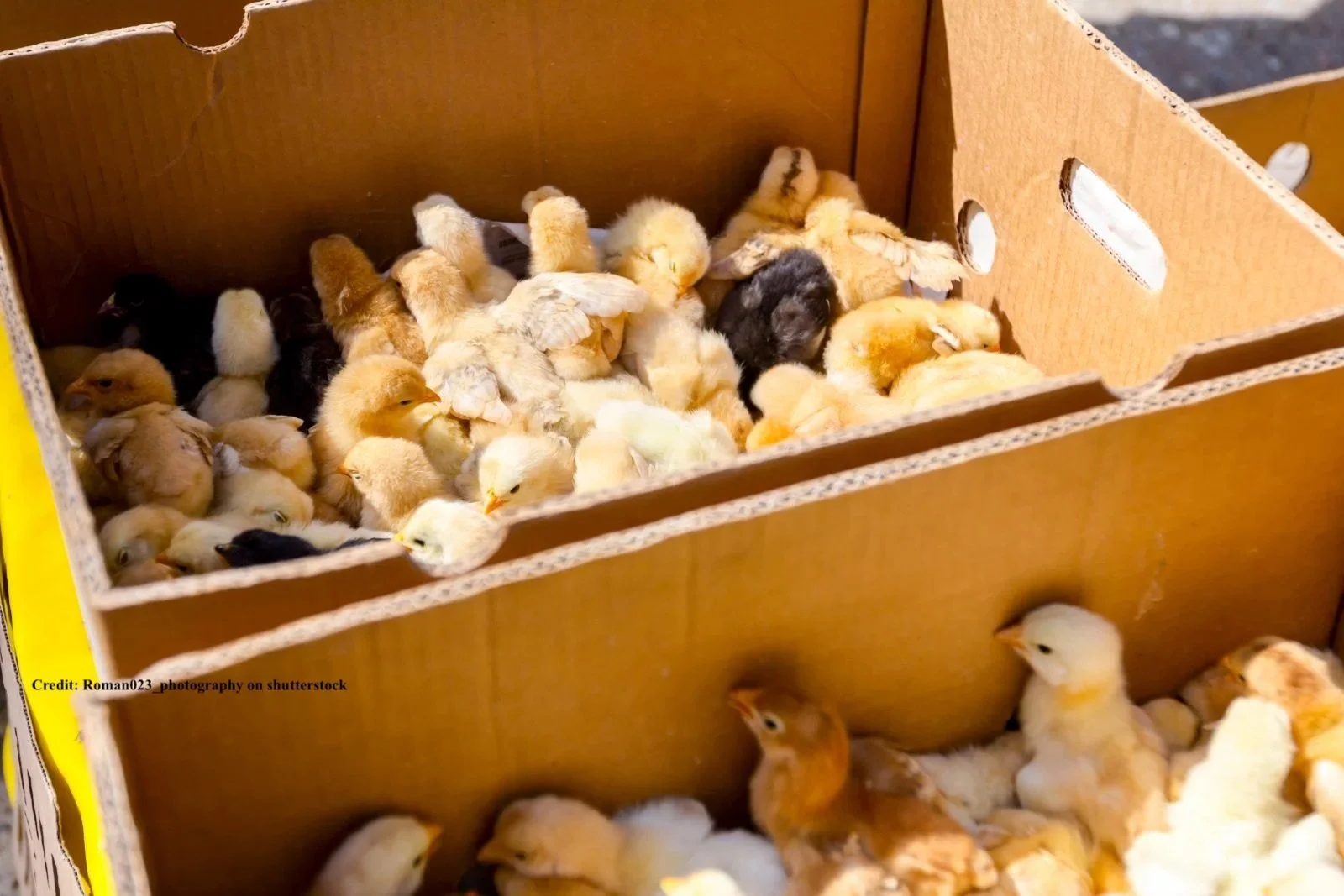
Did you know that the U.S. Postal Service mails live chicks? About 41 million a year.
LIC and 26 of our individual supporters have officially commented to ask the post office to treat these newborn animals more carefully.
The United States Postal Service (USPS) has proposed new mailing standards for live animals to improve package integrity and container identification. Specifically, USPS proposes to (1) prohibit the reuse of fiberboard containers, (2) require individual addressing and sequential numbering for multiple container shipments when bound together, and (3) require mailers to write the recipient’s name and address directly on the packaging of Adult Bird shipments. LIC supports these proposed standards and urges USPS to take additional measures to protect the welfare of day-old chicks and other animals shipped via USPS.
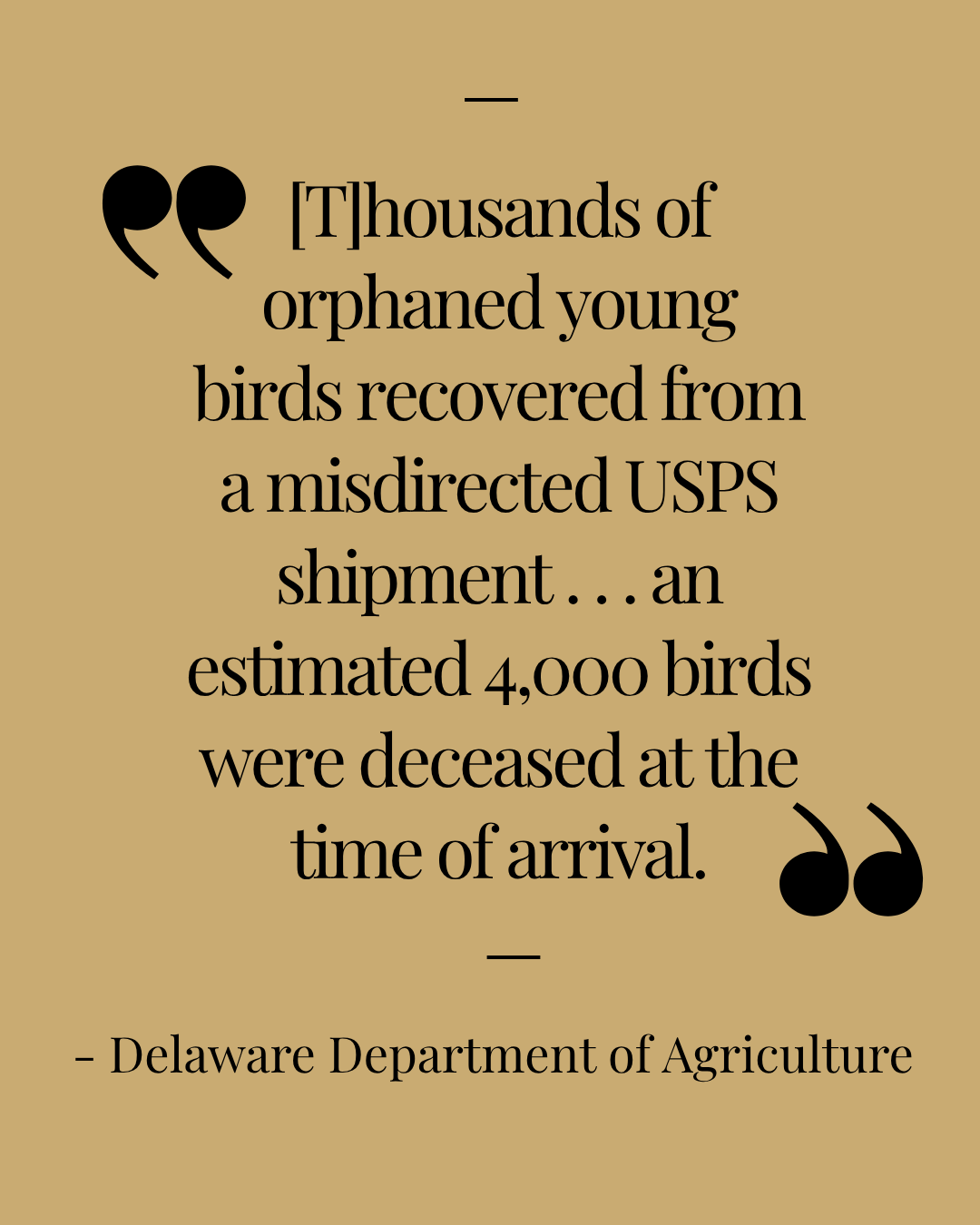
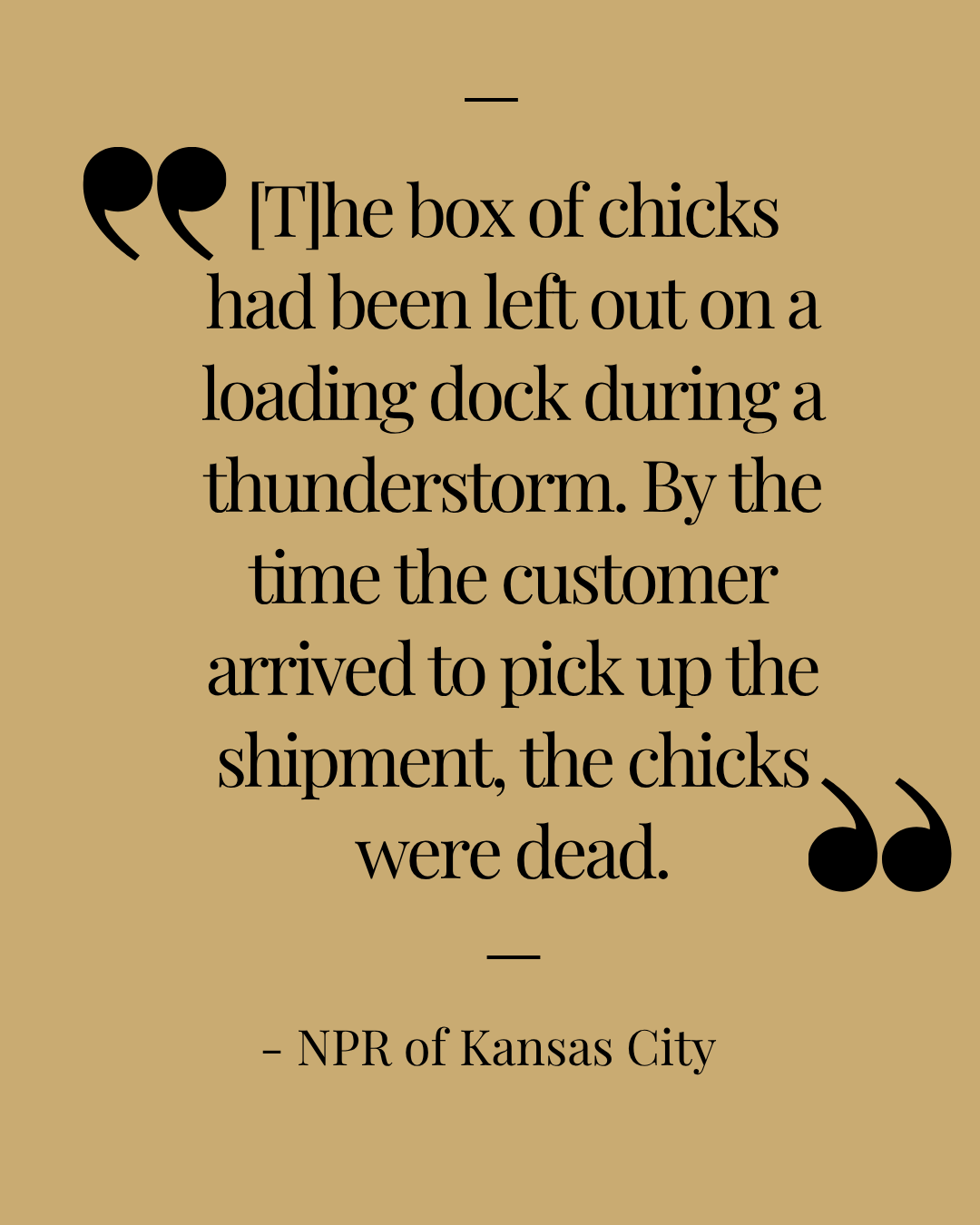
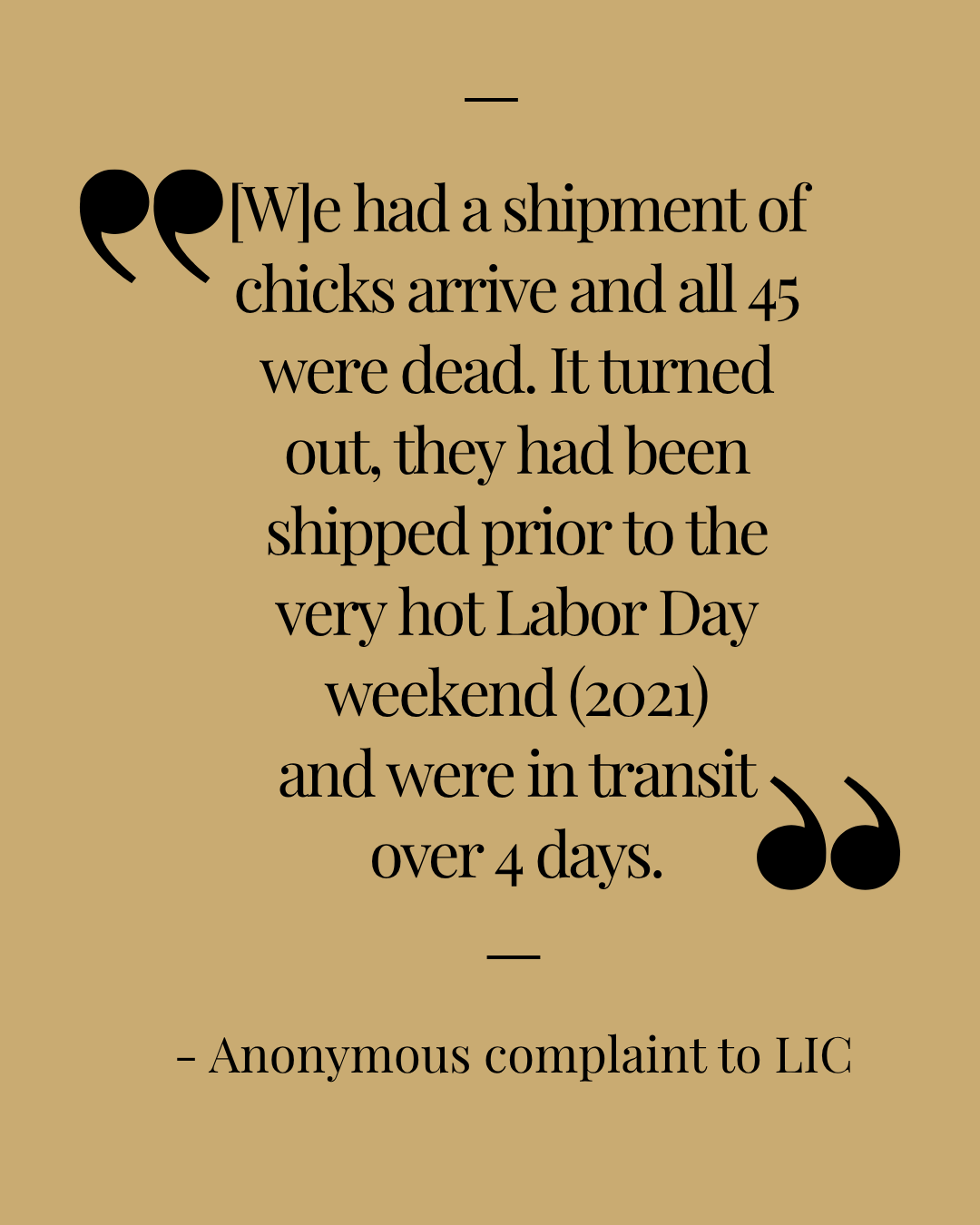
USPS has been shipping day-old chicks since 1918. And recent data reports that “11 million U.S. households have backyard chickens and 8 million U.S. households consider their chickens pets, making chickens one of the most popular pets in the country.” Hatcheries entrust USPS—the only mail and courier service in the United States that ships live day-old chicks—with safely delivering the chicks to their destination. Yet reports LIC has received, as well as news and government reports, demonstrate pervasive problems at USPS that result in the apparent suffering and death of thousands of chicks each year.
-
“[W]hile chickens are often viewed strictly as livestock, they are highly social and engaging animals,” and an Ohio State University veterinarian and poultry educator remarked that “[t]he bond between humans and animals is pretty profound.”
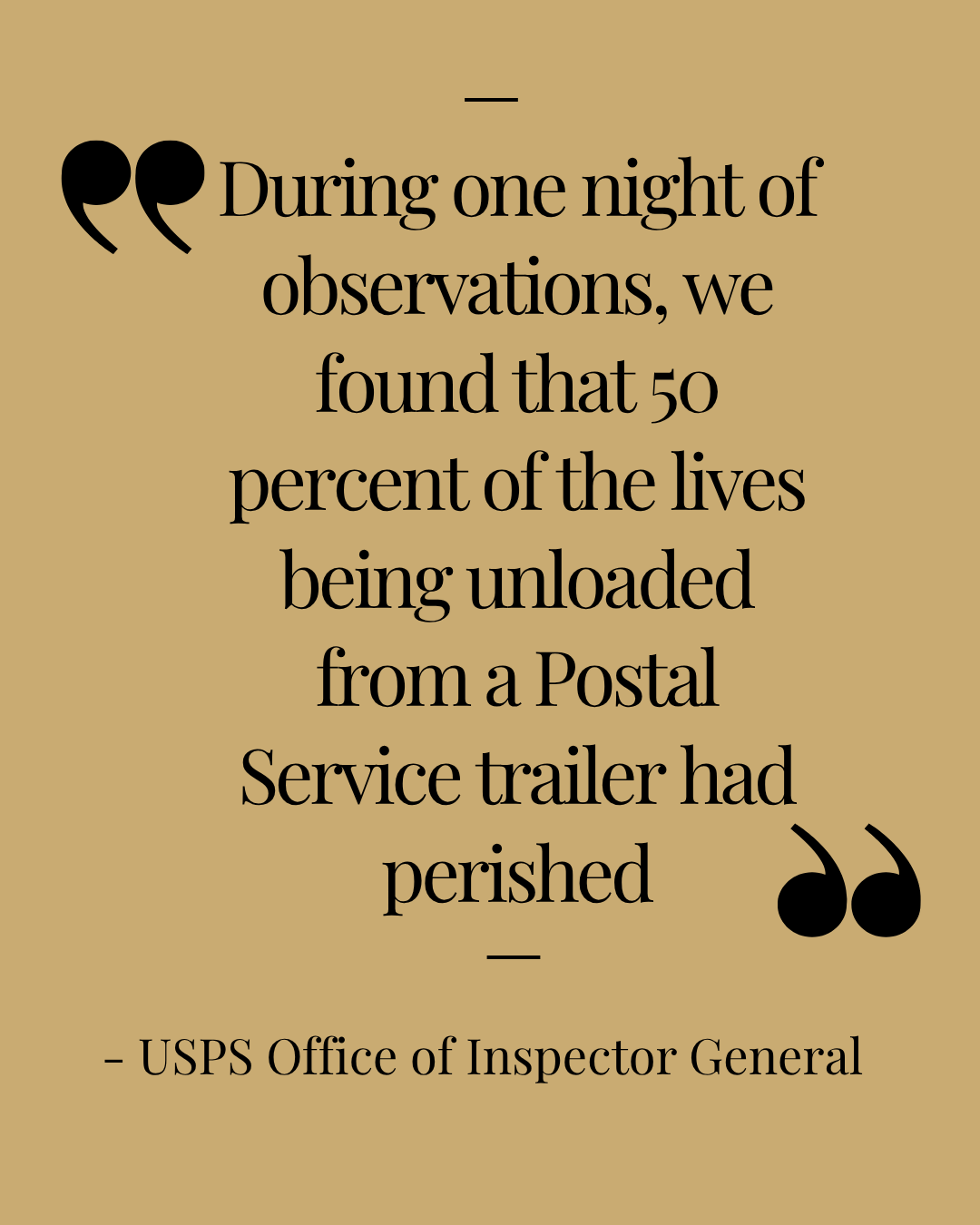
In 2025, the USPS Office of Inspector General (OIG) released a report documenting pervasive issues affecting the welfare of day-old chicks. For example, the OIG’s report found that USPS offices accepted shipments that violated USPS policy, meaning USPS personnel accepted shipment boxes that weren’t labeled with the hatching time and date, properly ventilated, or properly secured. The OIG also found that USPS didn’t “always deliver lives within 72 hours of hatching or follow policy for late deliveries.” The OIG observed a lack of oversight at air carrier operations, noting that “[d]uring one night of observations, [it] found that 50 percent of the lives being unloaded from a Postal Service trailer had perished.” The OIG further observed “lives staged in areas of the facility that were not climate-controlled, exposing [the lives] to excessive temperatures.” Similarly, the OIG noticed that USPS trucks have limited ventilation, meaning “leaving lives on [trucks] for extended periods of time increases temperatures and carbon dioxide levels,” jeopardizing their welfare. Alarmingly, the OIG uncovered that “thousands of lives were found left on a Postal Service truck for three days.” Id. at 15. And because USPS doesn’t track when live animals perish, USPS is limited in its ability to identify root causes and take corrective action.
The OIG recommended 11 specific solutions to USPS. LIC commends USPS for following many of the OIG’s recommendations and working to address the issues the OIG identified. But reports and complaints demonstrate that these efforts are not enough to adequately protect the welfare of day-old chicks and other animals.
-
LIC submitted a comment (read here) to USPS, urging USPS to consider 6 additional measures in issuing new mailing standards.
LIC supports USPS’s proposal to require mailers to write the recipient’s name and address directly on the packaging of Adult Bird shipments, but LIC urges USPS to extend this requirement to all shipments containing live animals.
Creating a label-detachment safeguard only for adult birds invites confusion during postal acceptance and handling. And concerns of label detachment equally apply to shipments of other animals, particularly day-old chicks because the OIG’s report reveals a pervasive issue with missent and delayed chick shipments. This is why LIC has asked UPSP to require that each constituent container include the recipient’s name and address directly on the package, even in circumstances where the combined shipment of containers may use a single shipping label.
LIC urges USPS to modify its delivery window to reflect a more scientifically accurate period, such as 48 hours, and require mailers to include a “deliver by” date.
LIC applauds USPS for imposing a deadline on chick delivery. However, USPS’s determination that day-old chicks must be no older than 24-hours and delivered within 72 hours results in the deprivation of feed and water for too long. In between hatch and first access to feed and water, chicks rely solely on their yolk sac and body reserves for survival, and the yolk sac is not an adequate replacement for feed. Because modern chicks have high metabolic rates and rapidly use bodily resources within the first 24 hours post-hatch, any residual yolk cannot adequately support a 72-hour travel period—even though some chicks may survive this duration—because this period significantly jeopardizes the chicks’ nutritional, hydration, developmental, and welfare needs. Accordingly, LIC urges USPS to modify its time period to require delivery within a more scientifically accurate period, such as 48 hours.
And in light of the necessity to deliver chicks timely, LIC urges USPS to follow the OIG’s recommendation and “require the mailer to include a ‘deliver by’ date” on the container, which is calculated based on the time from hatching.
LIC urges USPS to employ specialized tracking and collect data on perished animals to better understand the root causes of documented issues.
Recent evidence concerning transport capacity and package-flow problems supports the necessity of specialized tracking and data collection. Tracking information and survival data may reveal, for example, that USPS must limit its services to Express shipment for certain routes, times of year, or under other circumstances as USPS deems necessary to help ensure safe delivery. Overall, specialized tracking and data collection systems are imperative to addressing the issues raised in news and government reports.
LIC urges USPS to use only well-ventilated and climate-controlled transportation modes for shipping live animals.
Although USPS provides people with the special opportunity to obtain chicks and other animals, USPS apparently lacks sufficient transportation to safely deliver live animals, especially during certain weather conditions and for particular routes. Many standard USPS trucks lack adequate ventilation and climate control, resulting in chicks dying from the cold, heat, or suffocation, among other reasons. And as the OIG documented, temperatures and carbon dioxide levels can become fatal. As a result, LIC urges USPS to use only well-ventilated and climate-controlled transportation.
LIC urges USPS to implement and require a reservation system to help ensure that live animals are shipped timely.
LIC commends USPS for encouraging mailers to provide USPS offices with advanced notice of shipments of live animals. Yet because USPS experiences pervasive capacity limitations and delays in shipment, LIC urges USPS to implement and require a reservation system to proactively avoid delays in shipment, missent live shipments, and jeopardizing the welfare of live animals shipped.
LIC urges USPS to consider issuing temporary moratoriums on the acceptance of lives for shipment as it deems necessary.
Because many standard USPS trucks lack ventilation and climate control, shipping live animals during extreme weather places their welfare and survival at risk. For instance, a U.S. Government Accountability Office (GAO) report “found that about one-third (10,168 of 32,090) of USPS’s facilities are currently in areas that may be affected by one or more potential climate change effects—flooding, storm surge, sea level rise, and wildfires.” Moratoriums could help prevent live animals from perishing due to anticipated or known circumstances, especially extreme weather conditions.
-
In addition to LIC’s comment, 26 individual LIC supporters contacted USPS directly, asking USPS to handle chicks more carefully. Thank you for standing up for animals!
~
Thank you for reading a post on the LIC Blog! Views expressed in these blog posts are those of their authors and do not necessarily reflect the view of Legal Impact for Chickens.